Your Path to Becoming a
Credentialed Team
Credentialing is the heart of Windwalker. It’s how we ensure every therapy team meets the highest standard of care, for the people they serve and the pets who serve alongside them.
WHY IT MATTERS
A Standard You Can Trust
Credentialing is what separates professional pet assisted therapy from a friendly visit. Every Windwalker team completes a university-based course of study, joins the coalition, and commits to the ethical and philosophical standards that guide our work.
That standard is why Windwalker is the only pet assisted therapy organization approved for the Rhode Island Family Court, and why hospitals, schools, and libraries across the state trust our teams.
3
Courses in the
DJ Certificate
Four Steps to Becoming a Team
Credentialing takes commitment from both ends of the leash. Here is the full path, from first inquiry to working team.
01
Join Windwalker
Membership comes first. Only active members can be credentialed, so dues must be current before your file can move forward.
02
Complete the DJ Program
Three courses covering ethics, hands-on facility experience, and a supervised internship with your own pet.
03
Submit Your Packet
Application, health statement, photo release, and your commitment to the Windwalker code of ethics.
04
Work as a Team
Once credentialed, you and your pet design and run a program in a setting that fits your pet’s personality.
THE DJ PROGRAM WITH URI
Three Courses, One Certificate
The D.J., Maj-En & Panda Girl Inspired Professional Pet Assisted Therapy Certificate Program has been taught since 1990 and moved to the University of Rhode Island in 2024. It is approved for Continuing Education Units with NASW-RI.
Evening classes covering research in the profession, its history, and the ethical, legal, and safety issues that shape practice. Students study the link of abuse and the DJ Respect for Living Things program, a pet-inspired violence prevention and anti-bullying curriculum, and learn how to build goal-oriented, treatment-based programs.
Credentialed facilitators visit as guest lecturers with their own family pets. One session is dedicated to temperament testing of pets.
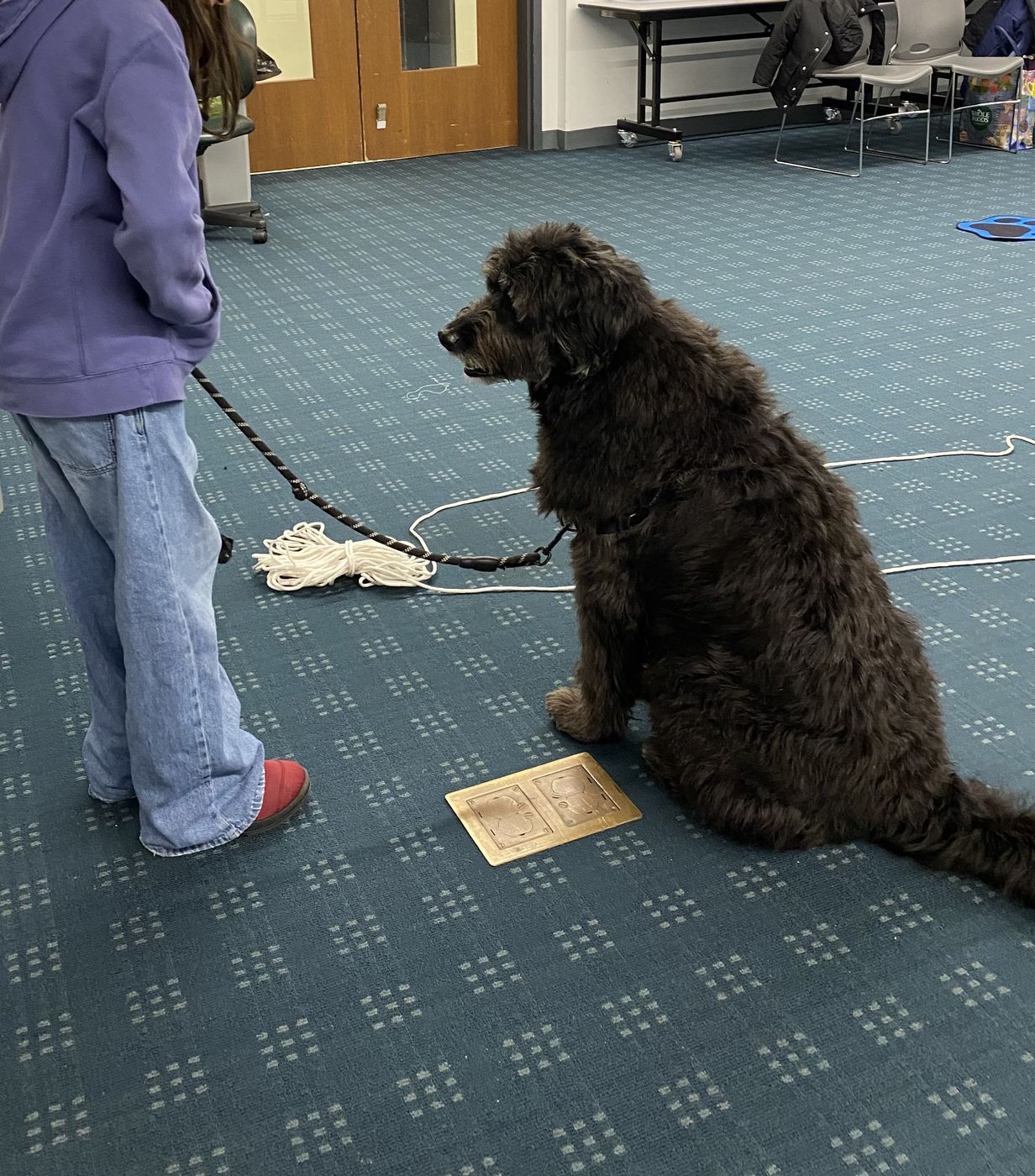
Hands-on and paws-on learning. Family therapy pets and their guardians experience the sights and sounds of the facilities where they will work: elevators, wheelchairs, fire alarms, and patients in bed.
Held at Elmhurst Rehabilitation and Healthcare Center, 50 Maude Street, Providence. There is a mid-term evaluation to gauge progress and a final evaluation. Because this is a group class of up to ten, dogs in heat cannot attend. Talk to the Program Director before enrolling if that may apply to your dog.
Students and their pets provide real pet assisted therapy treatment, in two parts. Part A is 10 supervised hours at training sites such as Elmhurst Healthcare and Rehabilitation, The Village at Waterman Lake, Eleanor Slater Hospital Zambarano Unit, public library programs, and veteran programs.
Part B is where it becomes yours. For a further ten hours you create your own program in a facility that has never had one, built around your pet’s personality and interests. That is why no two Windwalker programs look alike.
● NOW ENROLLING
New DJ Course 1 Begins Monday, January 4, 2027!
Elmhurst Rehabilitation Center, Providence, RI. Course questions can go to Program Director Cynthia Vanaudenhove at DJPPAT24@gmail.com or 401-309-4225.
What Happens Next
You submit this form and receive a confirmation by email.
We contact you within three to five business days to arrange a first visit.
Good to Know
Teams provide both professional and volunteer services in educational, clinical, and therapeutic settings.
Not Ready to Book?
If you have a general question first, we are happy to talk it through.
EQUIPMENT STANDARDS
What Your Pet Wears Matters
Windwalker equipment standards exist to protect the pet. Anything that works by causing discomfort has no place in this profession.
ACCEPTABLE
Collar
Leather, nylon, or fabric, closing with a buckle, quick release clip, or snap.
Leash
All leather or all fabric apart from the clip, no longer than six feet.
Harness
Fabric or leather, well fitted, metal only at the attachment rings. A front chest connection is preferred.
To bring
Water and a bowl, waste bags, a mat or blanket if your pet likes one, and small soft treats.
NEVER USED
Collars
Prong, chain choke, martingale with chain, shock, and vibration collars. Metal collars or harnesses.
Head gear
Halti or head halter type equipment worn over the nose.
Leashes
Retractable, stretchable, slip, and metal leashes.
Flea collars
Fine for prevention, but removed and stored before any client interaction to prevent skin reactions.